Wednesday, November 9, 2022

International Conference on Orthopedics and Sports Medicine


              Theragen receives US patent for spinal fusion bone growth stimulator.

                                   Theragen has announced the issuance of a second U.S. patent for its ActaStim-S, a wearable and app-compatible postoperative bone growth stimulator for patients undergoing spinal fusion, according to a release.


The ActaStim-S device, a wearable which can be connected to the Sync app, helps patients undergoing spinal fusion track their usage, activity levels and pain entry reporting, according to the release.


“Receiving the patent is important. It's also validating seeing the ActaStim-S design so well received by patients and surgeons,” Chris McAuliffe, CEO of Theragen, said in the release. “Our first patent focused on device connectivity, while this patent protects our device design. ActaStim-S offers significant practical advantages [vs.] large, obtrusive devices that can constrain ambulation and mobility. ActaStim-S remains the innovation leader compared to devices that do not track compliance and activity levels, communicate, or engage patients toward therapeutic compliance. Patients and surgeons expect medical devices to collect and process data, to be digitally connected, ultra-modern and easy to use for all ages and lifestyles. Our device design delivers proven therapy at home, at work or on the go; for modern times and high expectations,” McAuliffe added.

                                            Abstract Sumission - https://x-i.me/ortaji1

                                           Conference Registration - https://x-i.me/orcreg11

                                           Award Nomination - https://x-i.me/ortawr21
 

                                                               For Enquiries
                                                     orthopedic@pencis.com

Tuesday, November 8, 2022

International Conference on Orthopedics and Sports medicine


           Topical analgesics relieved pain , but deemed in ineffective for treatment of hand ,wrist OA.


                       Use of topical analgesics significantly improved pain scores in most patients with symptomatic hand and wrist osteoarthritis; however, according to researchers, the treatment is an undesirable long-term maintenance therapy option.

                        “Hand and wrist osteoarthritis (OA) is a highly prevalent upper extremity condition, with every one in two women and one in four men experiencing symptoms by the age of 85 [years], which strongly limits their activities of daily living,” Yuchen Liu, BS, said in her presentation at the American Society for Surgery of the Hand Annual Meeting.


                             Liu and colleagues distributed a 26-question survey to 100 adults with OA of the hand or wrist. Outcome measures included VAS pain scores, as well as patient-reported changes in swelling, stiffness and overall improvement of condition.


Of the 80 patients who completed the survey, 51 patients (63.75%) reported use of topical analgesics. Patients who used topical analgesics had higher pain scores (by an average of 18 points) compared with those who did not use topical analgesics, and their VAS pain scores improved an average of 24.8 points immediately after application of a topical analgesic. However, 63.46% of patients who used topical analgesics reported mild or no improvement in their condition; 39.6% of patients reported no improvement in stiffness; and 41.8% of patients reported no improvement in swelling.

           Abstract Sumission - https://x-i.me/ortaji1

           Award Nomination - https://x-i.me/ortawr21


    For Enquiries
orthopedic@pencis.com

Monday, November 7, 2022

Artificial intelligence: Potential to improve knee arthritis care


                               Although artificial intelligence is upending medical care, its potential applications to orthopedic surgery haven't been widely studied. Mayo Clinic found that a deep learning algorithm can identify and classify knee osteoarthritis on radiographs as accurately as fellowship-trained knee arthroplasty surgeons.


                               "This technology has the potential to significantly decrease the likelihood of inaccurate assessment of radiographs in the diagnosis and treatment of knee arthritis," says Adam J. Schwartz, M.D., an orthopedic surgeon at Mayo Clinic in Phoenix/Scottsdale, Arizona. "There is currently no standardized approach, and quite a bit of variability, in reading these radiographs. Reducing that variability can facilitate clinical decision-making and improve outcomes for patients."

The surgeons' ratings were compared to one another and to the neural network's ratings of those 576 knees. Statistical analysis found broad agreement between the assessments from the surgeons and the artificial intelligence tool.

Deep visual learning                         

    A convolutional neural network is a type of deep learning tool that is commonly used to evaluate visual imagery. Deep learning is a method of artificial intelligence that processes raw data — such as images — with learning algorithms to create layers of nodes, each receiving information from, and learning from, the other.

"Before implementing this type of solution in clinical practice, we need more data and additional training, to minimize the potential for errors in classifying the severity of osteoarthritis," Dr. Schwartz says. "But once you have an artificial intelligence model, you can find all sorts of ways to improve efficiency and reduce variability."


Abstract Sumission - https://x-i.me/ortaji1
Conference Registration - https://x-i.me/orcreg11
Award Nomination - https://x-i.me/ortawr21


For Enquiries
                                               orthopedic@pencis.com

Tuesday, November 1, 2022

International Conference On Orthopedics And Sports Medicine


                                  On orthopedics surgeon specializing in hand and upper extremity surgery at Mayo Clinic's campus in Florida, first saw the young basketball player, he noted the boy was not experiencing pain, yet had significant issues with range of motion (ROM).


                                 "He had a pothole in his wrist joint," he says. "His wrist fracture healed in a bad position — and the carpal bones were stuck in the hole.

                                  The reason for the hole present in the boy's wrist joint was an impaction fracture. It was not initially recognized and progressed to a malunion.


                                Distinct from a nonunion, where there is no healing in the joint, a malunion indicates nonanatomic healing, which can be a complication from surgery or something that occurs when nonsurgical management doesn't maintain the appropriate position of the bones.

                                In the young basketball player's case, no surgery had been performed on his wrist initially, as his health care providers at the time did not recognize the extent of injury. He had a different injury pattern from what is commonly seen in the wrist. In this case, only one part of the joint surface was affected — appearing almost like a die punch in that location — where typical wrist injuries either impact a larger portion of the joint or are outside of the joint altogether. This was a fracture in the scaphoid fossa, part of the joint that supports the scaphoid bone. Though small, this injury and its subsequent malunion caused swelling and limited use of the wrist. In some patients, a wrist malunion can cause the wrist joint to become completely unusable.


Traditional versus cartilage graft wrist fracture repair

                   A traditional wrist fracture repair would include an osteotomy. However, this procedure, with its usual bone cutting and removal, would be difficult to perform in a contained defect in a small area of the joint surface, says Dr. Aziz.

Due to the nature of the malunion in the basketball player's case, Dr. Aziz elected to take a knee cartilage graft in a non-weight-bearing region to repair the wrist joint. Though this was a unique repair for the player's injury, his parents agreed to pursue it. As the young patient was still skeletally immature with his growth plates

Applications of the knee cartilage graft for wrist malunion repair

                   Surgeons can perform the same type of knee cartilage graft for wrist malunion for adults as the basketball player experienced. The procedure is easier to perform in this population — considering future growth is not necessary, as it is in pediatric patients. Wrist joint injury can occur through a number of mechanisms — whether a slip in the kitchen, loss of balance on a neighborhood walk, or a fall while skiing or performing another physical activity. Older adult patients, in particular, experience wrist fractures often and tend to have more significant injuries.

Recovery from the knee cartilage graft procedure to repair the wrist includes casting for a defined period and then a removable orthosis, typically with a 6- to 8-week healing time after which the surgeon will approve use of the joint.


For Enquiries
orthopedic@pencis.com

International Conference On Orthopedics Sports Medicine


                          Mayo Clinic is employing a new method of pain prevention as part of limb amputation, heading off post-amputation morbidity from the formation of neuromas, which contribute to residual limb pain (RLP) and phantom limb pain (PLP). Until recently, traditional interventions for post-amputation neuromas have been unsuccessful: Neuroma recurrence rates were high.

                         The new method, regenerative peripheral nerve interface (RPNI), has been studied both preclinically and clinically. It prophylactically reduces potentially symptomatic neuromas through autologous free muscle grafts, often from the amputated limb, implanting the ends of transected nerves into the graft and supplying regenerating axons, reinnervating end organs and creating new neuromuscular junctions.


                         RPNI is active prevention of neuroma," says Shelley S. Noland, M.D., a hand and peripheral nerve surgeon at Mayo Clinic's campus in Arizona, and a major user of the RPNI technique. "Placing the nerve endings into muscle graft tissue gives the nerves somewhere to go and something to do."


Active, effective prevention versus inconsistent, passive prevention                
          The traditional method of deterring neuroma formation involved attempting to bury the nerve ends at the amputation site, effectively placing them away from the surface. However, Dr. Noland indicates high failure rates with these techniques, primarily because the buried nerves did not stay in place.

                          Physicians developed RPNI because former amputation techniques were inconsistently successful for pain prevention and did not offer the severed nerves a function, which all nerves instinctively seek.


Abstract Sumission - https://x-i.me/ortaji1
Conference Registration - https://x-i.me/orcreg11
Award Nomination - https://x-i.me/ortawr21


                                                                For Enquiries
                                                           orthopedic@pencis.com

International Conference On Orthopedics And Sports Medicine


                International  Conference On Orthopedics  And Sports  Medicine   


Results showed intra-articular injection of microfragmented adipose tissue or platelet-rich plasma had comparable low numbers of failures and adverse events without signs of disease progression in patients with knee osteoarthritis.

[Microfragmented adipose tissue] MF-AT seems to represent a suitable strategy for knee OA, especially for more advanced cases,” the authors wrote.


Researchers randomly assigned 118 patients with symptomatic knee OA to receive either a single intra-articular injection of MF-AT or platelet-rich plasma. Researchers collected IKDC subjective scores, KOOS subscales, EuroQol-VAS, EuroQol-5D and VAS for pain prior to the injection and at 1, 3, 6, 12 and 24 months after the injection.

Researchers considered the IKDC subjective score and the KOOS pain subscore at 6 months as the primary outcome. Researchers also evaluated patients’ knees with radiography and high-resolution MRI using the Whole-Organ Magnetic Resonance Imaging Score at baseline and at 6, 12 and 24 months.


Potential risks and challenges for patients with 40-plus BMI

           BMI is independently associated with increased risk of postoperative complications after THA and TKA, says Dr. Bedard. He also indicates obesity usually does not occur in a vacuum, without other health consequences. In fact, it can be a marker of poor overall wellness: Individuals who have a 40-plus BMI tend to be overall less healthy, and often have other medical problems that can increase their risk of complications.


                    Soft tissue depth, which makes implant positioning more difficult for the surgeon

                    Increased risk of wound complications

                    Elevated infection risk

                    Increased risk of dislocation due to soft tissue impingement or tissue levering the joint out of place
 

Mayo Clinic's approach to helping individuals with high BMI who need TKA or THA

                What Dr. Bedard recommends, in light of risks for the patient with high BMI who needs pain alleviation and functional improvement, is optimizing the patient's weight and health pre-surgery. This typically includes the following process with a surgeon, patient and other physicians who specialize in weight loss:

                        
                      Discussing the patient's arthroplasty risks and any patient concerns

                      Setting reasonably attainable health improvement goals

                      Presenting options for how to reach the goals and pros and cons of each potential tool.


Referral considerations for physicians treating patients with high BMI who require arthroplasty

                      Dr. Bedard indicates multiple options exist for physicians to help patients with a high BMI become ready for a TKA or THA. Community physicians should apply similar pre-surgical optimization strategies as those employed by Mayo Clinic. If a physician does not have access to resources to help optimize patients, one option to consider is referring the patient to Mayo Clinic.


For Enquiries
orthopedic@pencis.com

International Conference On Orthopedics And Sports Medicine


                        Published results showed intra-articular injection provided significantly greater pain relief and functional improvement of thumb carpometacarpal joint arthritis at 3 months compared with extra-articular injection.


                         “A steroid injection given into the [carpometacarpal] CMC joint of the thumb will provide, on average, longer lasting relief than when it is given outside of the joint,” Brian M. Katt, MD, told Healio.


                         Katt and colleagues used wrist radiographs to visualize location of the CMC joint injection with triamcinolone and radiopaque contrast among 102 hands with thumb CMC joint arthritis. Researchers collected DASH questionnaires and VAS pain scores before injection and at 1 week and 1, 3 and 6 months after injection. Researchers constructed generalized linear regression models to identify variables associated with clinical outcomes.

                        Researchers found improvements in DASH and VAS scores after 1 week in both the intra-articular injection group and extra-articular injection group. Although both groups reported worse DASH and VAS scores at 3 months, researchers noted significantly lower DASH and VAS scores among patients in the intra-articular group.


Abstract Sumission - https://x-i.me/ortaji1
Conference Registration - https://x-i.me/orcreg11
Award Nomination - https://x-i.me/ortawr21
Award Registration - https://x-i.me/oaregaj5
Member Nomination - https://x-i.me/ortmem0


#orthopedics#ortho#medicine
#ortho#cartilage#stem cell
#sports#orthopedicsdcotor
#international#conference

For Enquiries
orthopedic@pencis.com

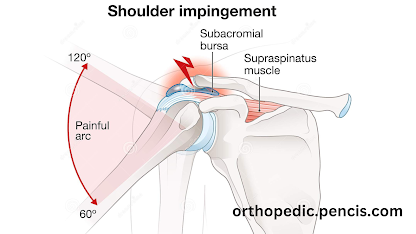
Impingement

Impingement refers to a medical condition characterized by the compression or pinching of soft tissues, such as tendons or bursae, between ...