Friday, November 25, 2022

Is 'frozen shoulder' a genetic condition? Study finds links to specific genes

Frozen shoulder, or adhesive capsulitis, is a common cause of shoulder pain and immobility. New findings point to specific genes associated with an increased risk of this condition, reports the Journal of Bone & Joint Surgery.The risk genes are associated with nearly a sixfold increase in the odds of developing frozen shoulder—a stronger association for most known clinical risk factors, according to the new research by Mark T. Langhans, MD, Ph.D., of Hospital for Specialty Surgery, New York. The authors believe their findings may lend new insights into the causes, prevention, and treatment of adhesive capsulitis.


Genome-wide association study finds 'significant loci' affecting frozen shoulder risk

Patients with adhesive capsulitis develop painful and progressive loss of shoulder motion with associated pain. Frozen shoulder is one of the most common shoulder conditions, occurring in up to 10% of people at some time in their lives. Although the exact cause is unclear, frozen shoulder sometimes occurs after an injury, surgery, or other condition that reduces shoulder mobility. Loss of motion results from fibrosis (scarring or thickening) of the capsule around the shoulder joint.Certain clinical factors are associated with an increased risk of frozen shoulder, including diabetes, thyroid disease, and smoking. Recent studies have suggested that risk is also higher in people with affected relatives—suggesting a possible genetic predisposition. Dr. Langhans and colleagues performed a genome-wide association study to identify specific genes that might be related to the risk of frozen shoulder.
Data studied from large British database

The study used data from a large British database, the UK Biobank, which includes genetic and health data on approximately 500,000 patients. The analysis focused on 2,142 patients with adhesive capsulitis compared to those without this diagnosis. Possible genetic associations were adjusted for other factors, including sex, diabetes, thyroid disease, history of shoulder dislocation, and smoking.

The study identified three significant loci for frozen shoulder. The strongest association was found for gene variants located at a site called WNT7B.This finding was consistent with previous studies that reported a possible link between WNT7B and frozen shoulder, along with several other orthopedic-related conditions. Weaker associations were also found for two previously unreported genetic loci located near genes for POU1F1 and MAU2.

All three associations remained significant after adjustment for other factors. Together, the three variants carried nearly a sixfold increase in the odds of developing frozen shoulder. That was greater than the risk associated with diabetes (about four-fold) or thyroid disease (less than two-fold), and second only to smoking (about 11-fold).

#orthopedic#ortho|#shouldersuergy
#Elbow Surgery#conference #pencis
#bone#Elbow Surgery

                                                                       For Enquiries
                                                              orthopedic@pencis.com

Wednesday, November 23, 2022

International Conference on Orthopedics and Sports Medicine

International Conference on Orthopedics and Sports Medicine, organized by the Pencis group. International Conference on Orthopedics and Sports Medicine is a discussion of common Bacteria, orthopedics conference are disorders caused by organisms The focal point of orthopedics Conferences is to bring forward discoveries, examine the system and strategic issues, assemble and keep forth basic systems between analysts, professionals, arrangement producers, and agents of orthopedics Associations. Essential orthopedics Conference put emphasis on its theme "Innovation through Information on Orthopedic and Sports Medicine" and intends to provide an impetus to health practice, administration, and training in connection to health inconsistencies and conjugation of other different points. Patients with access to a general essential care doctor have brought down available medicinal services cost than those without one, and Health results been better. orthopedics Conference is an opportunity to interact with specialists and to learn the latest Orthopedic and Sports Medicine and orthopedics conference related information.


Abstract Sumission - https://x-i.me/ortaji1
Conference Registration - https://x-i.me/orcreg11
Award Nomination - https://x-i.me/ortawr21
Award Registration - https://x-i.me/oaregaj5
Member Nomination - https://x-i.me/ortmem0


#orthopedics #orthodontics #conference

Thursday, November 17, 2022

Orthopedic surgery patients can recover just as well without using opioid-based painkillers


                           Patients can recover from orthopedic surgery just as well without using opioid-based painkillers, says a McMaster University and Hamilton Health Sciences (HHS) study published by the Journal of the American Medical Association (JAMA).

                           Study results showed that by prescribing a combination of three non-opioid painkillers to patients, researchers successfully reduced approximately tenfold the amounts of opioids consumed over a six-week post-operative period, without altering their pain levels.

                           Co-principal investigator Olufemi Ayeni and his team gleaned their results by enrolling 193 patients between March 2021 and March 2022 from three Hamilton hospitals including HHS' McMaster University Medical Centre and Hamilton General Hospital, and St. Joseph's Healthcare Hamilton.

                          The patients were randomly assigned to either a control group of 98 receiving standard opioid-based painkillers or an opioid-free group (93) receiving a combination therapy of naproxen, acetaminophen and pantoprazole and a patient educational infographic. The opioid-free group did have access to opioid medication if required for pain. Each patient undergoing outpatient knee or shoulder arthroscopic surgery was monitored for six weeks after their operation.

                          After the six weeks, those in the control group had had an average of 72.6 mg of opioids, compared to 8.4 mg in the opioid-sparing group. Six patients in the control group and two patients in the opioid-sparing group asked for opioid medication after discharge. Difference in pain scores, patient satisfaction with care and number of adverse events were not significantly different.


                        "Furthermore, by reducing the number of opioids prescribed, we can collectively reduce the development of a reservoir of unused medications that can cause harm to many in society," he said.

                        "By one estimate, there are at least 100,000 of these surgeries in Canada annually, meaning that shifting prescription practices to reduce opioid use can reduce patient exposure and, by extension, the potential for dependency on opioids."

                         Opioids remain the post-operative painkiller of choice for orthopedic specialists on both sides of the border, but North America's ongoing opioid epidemic is forcing a rethink among clinicians, Ayeni said, adding that orthopedic specialists at times prescribe more opioids than recommended by medical guidelines.

                         Ayeni said that by switching to non-opioid painkillers after surgery, surgeons can play their part in combatting the ongoing opioid epidemic and reduce the risk of dependency in patients recovering from orthopedic surgery.

                         Funding for the study was received from Physician Services Incorporated and Hamilton Health Sciences New Investigator Fund.


Abstract Sumission - https://x-i.me/ortaji1
Conference Registration - https://x-i.me/orcreg11
Award Nomination - https://x-i.me/ortawr21

                                                          For Enquiries 
                                                 orthopedic@pencis.com

PROMs data infrequently accessed by members of clinical care, study suggests


                           Even when patient-reported outcome measures (PROMs) are successfully incorporated into electronic health records (EHRs), these patient-centered data are infrequently accessed by members of clinical care teams, suggests a study in the November/December issue of American Journal of Medical Quality (AJMQ), official journal of the American College of Medical Quality (ACMQ). The journal is published in the Lippincott portfolio by Wolters Kluwer.

                           At one large orthopedic practice, care teams accessed PROMs data for less than 1% of visits by patients undergoing total knee or hip replacement surgery, according to the report by Jeanette Y. Ziegenfuss, PhD, of HealthPartners Institute, Minneapolis, and colleagues. They write, "Making PROMs available for care team review in the EHR...is not enough to encourage integration of PROMs into clinical care for patients."


                           A key focus of efforts to measure healthcare quality, PROMs are designed to capture data on outcomes important from the patient's perspective – for example, daily functioning, quality of life, and experience of care. Data from PROMs have mainly been used for public reporting of system-wide outcomes or quality improvement initiatives. Few studies have evaluated whether and how PROMs are being used to inform everyday patient care.

                         As part of a larger project at a Midwestern health network, the study orthopedic department made an investment to integrate PROMs into the electronic health records (EHRs). Starting in 2017, the clinic began collecting PROMs data on all patients undergoing total knee arthroplasty (TKA) or total hip arthroplasty (THA), including assessments of joint function, general health and functioning, and patient satisfaction.

                        How was this information used at the point of care? To find out, Dr. Ziegenfuss and colleagues analyzed how often the PROMs data included in the EHR were accessed by orthopedic surgeons and other members of the care team for patients undergoing TKA or THA over a 15-month period in 2019-20.

                                                       For Enquiries
                                             orthopedic@pencis.com

Study assesses musculoskeletal health needs of underserved patients


                       To improve the health of a community, the first step is to identify its most pressing needs. To that end, in 2022 Hospital for Special Surgery (HSS) implemented a community-based participatory research (CBPR) approach to assess musculoskeletal health needs, identify health disparities and support the development of initiatives to address unmet needs.

                      Critical issues included a lack of health education and awareness in managing arthritis and other painful conditions; a high incidence of falls in the community; and limited access to care among underserved populations.

                      The study, "Assessing Musculoskeletal Health Needs of Underserved Patients & Community Members Using a Community Based Participatory Research Approach," was presented virtually at ACR Convergence 2022, the annual meeting of the American College of Rheumatology in Philadelphia.
                                                   

                             HSS researchers used a mixed-method approach to develop a Community Health Needs Assessment (CHNA). "For quantitative data, we distributed a community survey in four languages-;English, Spanish, Chinese and Russian-;to assess the socio-demographic characteristics of the populations we serve; health status and quality of life; health behavior and lifestyle; use of and access to care; and health education needs," explained Adeniran. "For qualitative data, we conducted interviews with 22 community partners, including community-based organizations, city and state agencies and universities."

                            The survey was distributed in various ways, including online, via email, using Alchemer panels, in person, and through the mail over a four-week period from January 15 to February 15, 2022. A total of 18,248 patients and community members completed the surveys, with 57% representing a diverse and underserved population.

                           In addition to the surveys, interviews with community partners provided valuable insights into unmet health needs, Adeniran noted. Community organizations represented all five boroughs of New York City, as well as surrounding areas serving racially/ethnically diverse populations. They represented all age, gender, and socioeconomic groups.


Abstract Sumission - https://x-i.me/ortaji1
Conference Registration - https://x-i.me/orcreg11
Award Nomination - https://x-i.me/ortawr21


                                                            For Enquiries
                                                    orthopedic@pencis.com

Thursday, November 10, 2022

Vertebral body tethering: Another option for treating scoliosis in children


                ROCHESTER, Minn. — Fusion surgery has been the long-standing treatment for people with scoliosis - a side-to-side curve of the spine. But other options have become available — including vertebral body tethering for children with scoliosis.\


               Mild scoliosis cases are monitored over time. Small curves in growing children can progress rapidly without treatment. Moderate scoliosis in growing children is treated with bracing. Until recently, severe scoliosis could only be treated with fusion surgery.


                 "Fusion had been a reliable treatment approach with a durable long-term result and powerful correction of the spinal curvature," Dr. Larson says. "But with fusion, the spine no longer grows, and there is no flexibility of the spine over the fused vertebrae. Some patients and families value spinal motion and growth, and would prefer another treatment approach for severe scoliosis."


                                When the cord is tightened during the surgery, the spine straightens. As the child grows, the spine may straighten even more. Growing children with moderate to severe scoliosis and certain curve types are eligible for the procedure.

                                 Although spinal motion and growth remains, there are potential downsides to the procedure. At this time, there is a higher risk for a second surgery compared with fusion surgery, due to overcorrection or undercorrection of the scoliosis. The long-term durability of the procedure is not known, and a fusion surgery may be required eventually.


                                 "Patients and families should be informed about their treatment options," Dr. Larson says. "Some families would like an alternative to fusion surgery. More information is coming out about nonfusion scoliosis surgery. If patients are interested in vertebral body tethering, I would encourage them to go to an experienced center, as this is an emerging technology."


Abstract Sumission - https://x-i.me/ortaji1
Conference Registration - https://x-i.me/orcreg11
Award Nomination - https://x-i.me/ortawr21
Award Registration - https://x-i.me/oaregaj5
Member Nomination - https://x-i.me/ortmem0


                                                                For Enquiries
                                                         orthopedic@pencis.com

Dynamic sagittal tether may yield faster return to work vs. lumbar interbody fusion


                   CHICAGO — Results presented here showed decompression and dynamic sagittal tether stabilization for degenerative spondylolisthesis may yield faster return to work and activities of daily living compared with lumbar interbody fusion.


                                   “The reduction in disability and faster return to work and activities of daily living may indicate lower perioperative morbidity and faster recovery similar to decompression, while the sustained reduction in disability may indicate clinical durability similar to fusion,” William F. Lavelle, MD, professor of orthopedic surgery at Upstate University Hospital, said in a press release from Empirical Spine Inc. “These data indicate that LimiFlex [Dynamic Sagittal Tether] is a promising alternative to fusion for this large patient population.”


Lavelle and colleagues propensity matched 136 patients with degenerative spondylolisthesis and lumbar spinal stenosis who underwent decompression and dynamic sagittal tether stabilization (LimiFlex Dynamic Sagittal Tether, Empirical Spine Inc.) with 131 patients who underwent decompression and transforaminal lumbar interbody fusion. Researchers collected work status, return to work, activities of daily living and change in disability preoperatively and at 12-month follow-up and compared the results between the two groups.

With regard to change in disability, disability is measured by the [Oswestry Disability Index] ODI, a great drop in ODI is potentially a better outcome, and we see that both the fusion group and the dynamic sagittal group had a drop in their ODI scores with a difference being toward the advantage of the dynamic sagittal tether,” Lavelle said in his presentation at the North American Spine Society Annual Meeting.


                                                     For Enquiries
                                                orthopedic@pencis.com

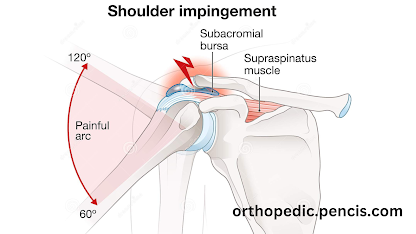
Impingement

Impingement refers to a medical condition characterized by the compression or pinching of soft tissues, such as tendons or bursae, between ...